Why "Natural" TTS is a legitimate breakthrough for Accessibility
Jan 25, 2026
2 min read
Text-to-Speech has existed for years, but for a long time, listening to computer-generated speech was not exactly comfortable.
Older synthetic voices often sounded flat, mechanical, and disconnected from the meaning of the text. They could read the words correctly, but listening to long articles, documents, or study material could quickly become tiring.
Natural AI voices are changing that.
The Problem With Listening Fatigue
When speech sounds unnatural, your brain has to work harder to follow it. Strange pauses, robotic pacing, and missing emphasis can make even simple sentences harder to process.
This matters especially for people who rely on audio to access written information, including people with visual impairments, reading difficulties, or other accessibility needs.
Modern Text-to-Speech can produce much more natural rhythm, pacing, emphasis, and intonation. Questions can sound like questions. Important words can receive appropriate emphasis. Sentences can pause where a person would naturally pause.
The result is not simply a nicer voice. It can make listening more comfortable and help people focus on the meaning of the content rather than the mechanics of the voice.
Accessibility That Benefits Everyone
This is a good example of the Curb Cut Effect: technology designed to improve accessibility often becomes useful to a much wider audience.
Natural Text-to-Speech can help:
People with visual impairments access written content through audio.
People with dyslexia or reading difficulties listen instead of relying entirely on written text.
Students review notes and learning material audibly.
Language learners hear pronunciation and sentence rhythm.
Busy professionals listen to documents while doing other tasks.
Content creators turn scripts and written ideas into spoken content without recording everything manually.
Accessibility improvements often make technology easier for everyone.
Turning Written Content Into Natural Audio
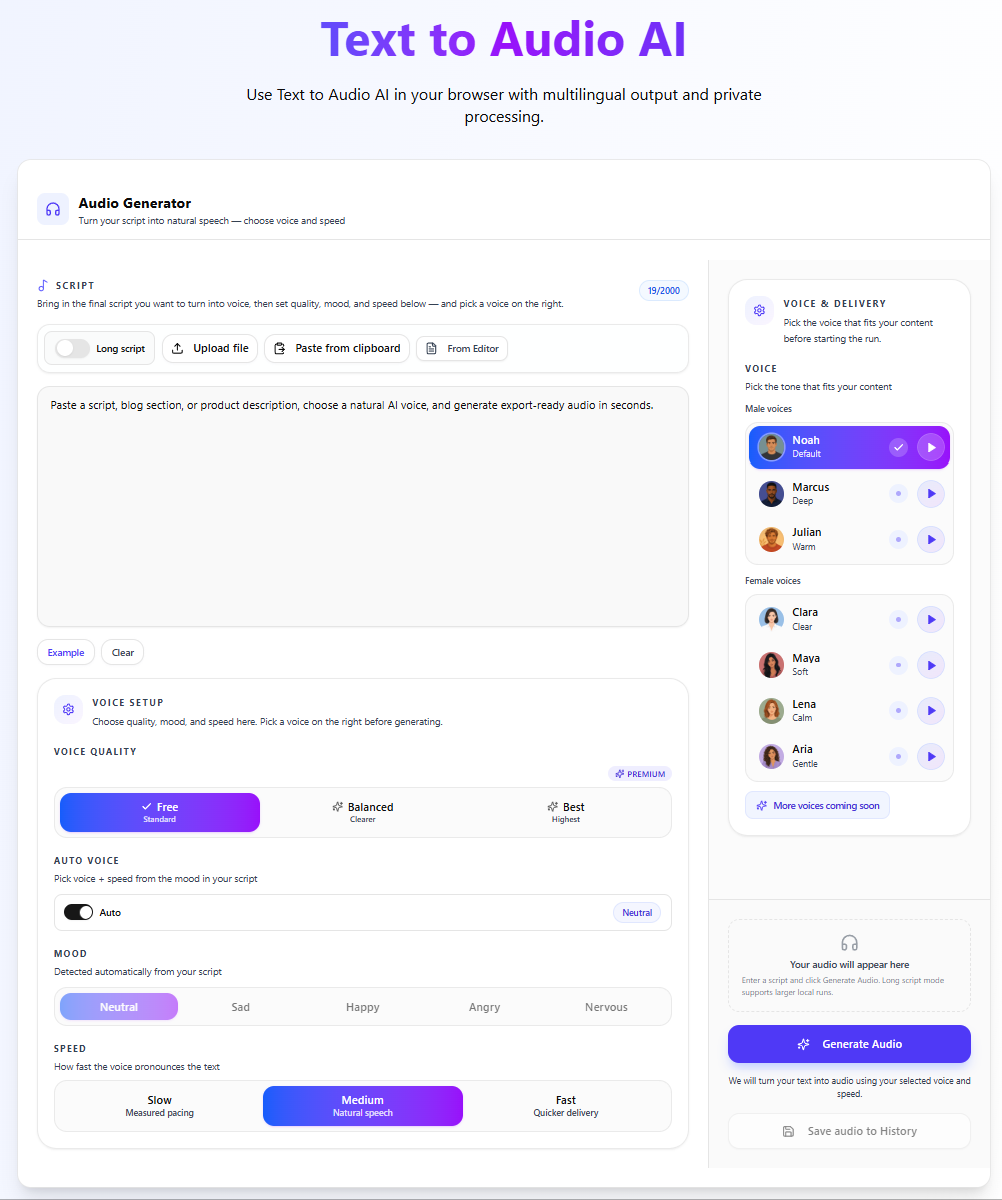
This is also where tools such as the VoiceCraftTool Text to Audio tool become useful.
Instead of simply converting text into a basic robotic voice, you can turn a script, article, study note, or other written content into more natural-sounding audio. You can choose different voices and adjust options such as mood, speaking speed, and audio quality depending on how the content should sound.
For someone who prefers listening over reading, that can turn a block of text into something much easier to consume.
For creators, educators, and businesses, it also provides a simple way to make written information available in another format without needing microphones, recording equipment, or repeated voiceovers.
More Than Better-Sounding AI
Natural TTS may look like another improvement in generative AI, but its accessibility impact is much more important.
The real breakthrough is not that computers can suddenly sound more human. It is that written information can become easier to listen to, understand, and access.
As natural speech technology continues improving, the web does not have to be exclusively visual or text-first. Articles, educational material, documents, and everyday information can increasingly be available in whichever format works best for the person using them.
And that is what makes natural Text-to-Speech a meaningful accessibility breakthrough.
Did you find this helpful?
Share this article with your friends and colleagues.