Use Script Editor in your browser with multilingual output and private processing.
Craft step — shape wording for speaking or publishing
Script Editor
AI-powered Improvements
AI loading0/1000
ToneBalanced improvements
AI Quality
Input
Your draft. Edit it here, then improve it with the choices above.
Output
Your polished version appears here with quick actions to save, export, print, or reuse it.
Your improved draft will appear here
Start with rough notes, a spoken draft, or a messy script. We’ll clean the wording, sharpen the flow, and match the tone you choose.
1Paste or type your draft
2Pick tone, language & quality
3Click Improve script
AI-powered editing
Script Editor History
Saved items for this tool (per account)
Script Editor Feedback
Ratings and comments from people who used this tool
No feedback yet for this tool.
Improve your scripts with better tone, structure, and clarity by turning rough text, video ideas, audio content, or recorded material into a cleaner and more polished script. A good script needs more than just an idea. It needs clear wording, smooth flow, the right tone, and a structure that keeps the audience engaged. The Script Editor helps you paste, write, record, or upload your script content, choose a tone from the dropdown, select the quality level, and generate an improved script that is easier to read, record, present, or publish.
What is a Script Editor?
Script Editor is an AI script editing tool that helps users improve their written, recorded, uploaded, or pasted scripts. It can refine the script’s tone, structure, wording, clarity, and overall quality while keeping the main message and original purpose of the content.
Instead of rewriting everything manually, users can add their script and let the tool improve the flow, correct weak parts, organize ideas, and make the script sound more natural. It is useful for creators, marketers, speakers, podcasters, educators, and anyone who wants a cleaner and better script draft.
Add your script content
Paste your script
Paste your existing script directly into the tool and edit it for better tone, sentence flow, structure, and readability.
Write your script manually
Write your script inside the tool if you want to start with rough ideas, notes, or an unfinished draft and turn it into a more complete script.
Record your script
Record your script or spoken content and use the tool to improve the script text, structure, and overall quality.
Upload a script file
Upload your script file, video script, audio script, notes, or draft content and turn it into a cleaner, more polished version.
Key features of Script Editor
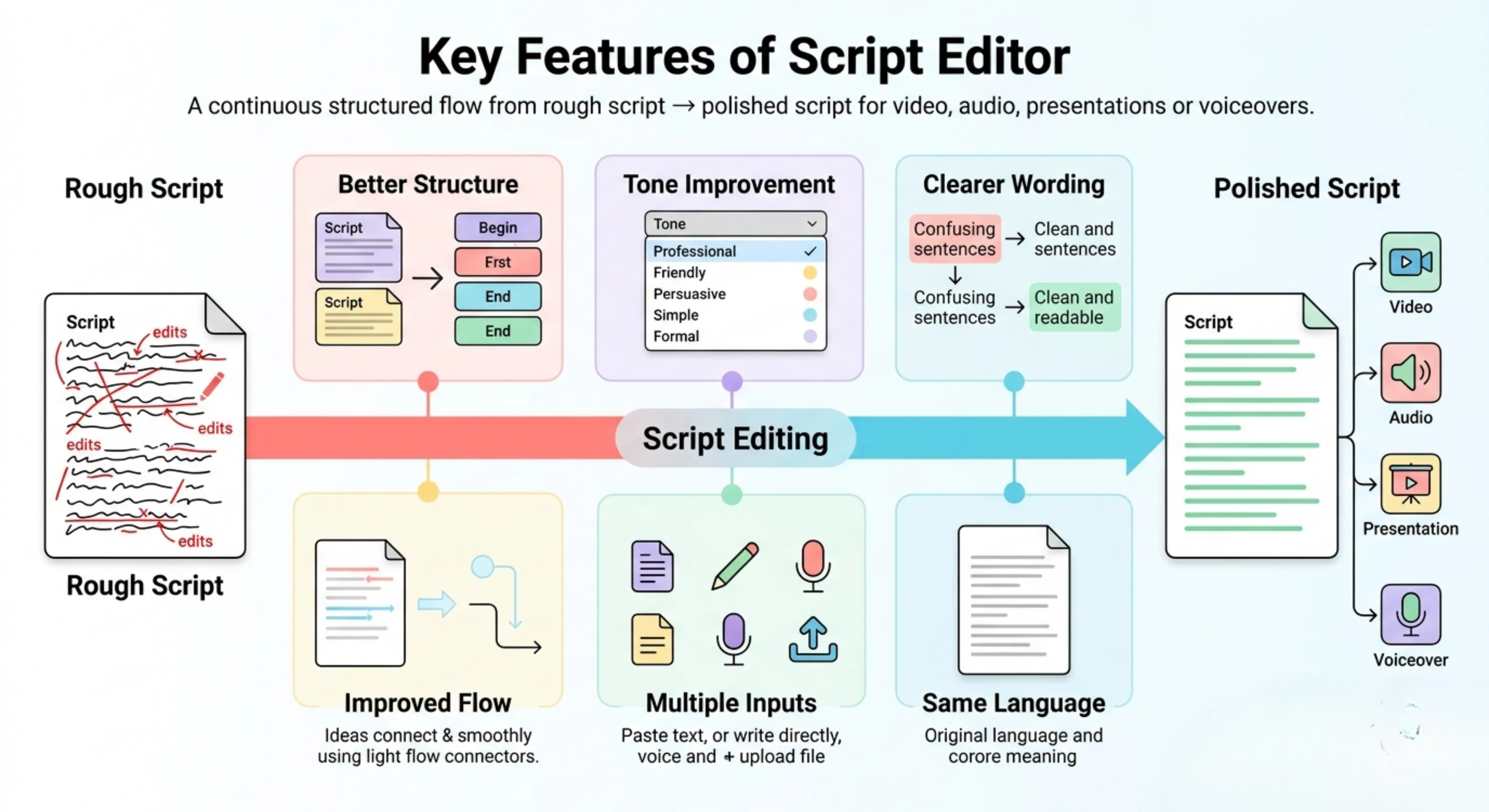
Better script structure
The tool organizes your script into a clearer format so the message flows naturally from the beginning to the end.
Tone improvement
Choose a tone from the dropdown and let the tool adjust the script style according to your purpose, audience, and content type.
Clearer wording
The tool improves weak, confusing, or repetitive sentences so the script becomes easier to read, speak, and understand.
Improved flow
Script Editor helps connect ideas more smoothly, making the final script feel more natural for videos, audio, presentations, or voiceovers.
Multiple input options
Users can paste content, write directly, record at the same time, or upload a file, making the tool useful for different script editing needs.
Same-language output by default
The edited script is generated in the same language as the input by default, so the original meaning and natural context stay consistent.
Choose a different output style
Users can select different tones from the dropdown to make the script sound professional, friendly, persuasive, simple, emotional, formal, or suitable for their content goal.
Choose the right processing mode
Fast
Best for quickly improving a script when you need a cleaner draft in less time. This mode is useful for simple edits, quick reviews, and basic structure improvement.
Balanced
Best for regular script editing. It gives a good mix of speed and quality, making it useful for most video scripts, podcast scripts, social media scripts, and presentation drafts.
Best
Best for detailed and carefully edited scripts. This mode may take more time, but the output is more focused, polished, and deeply prepared.
How to use Script Editor
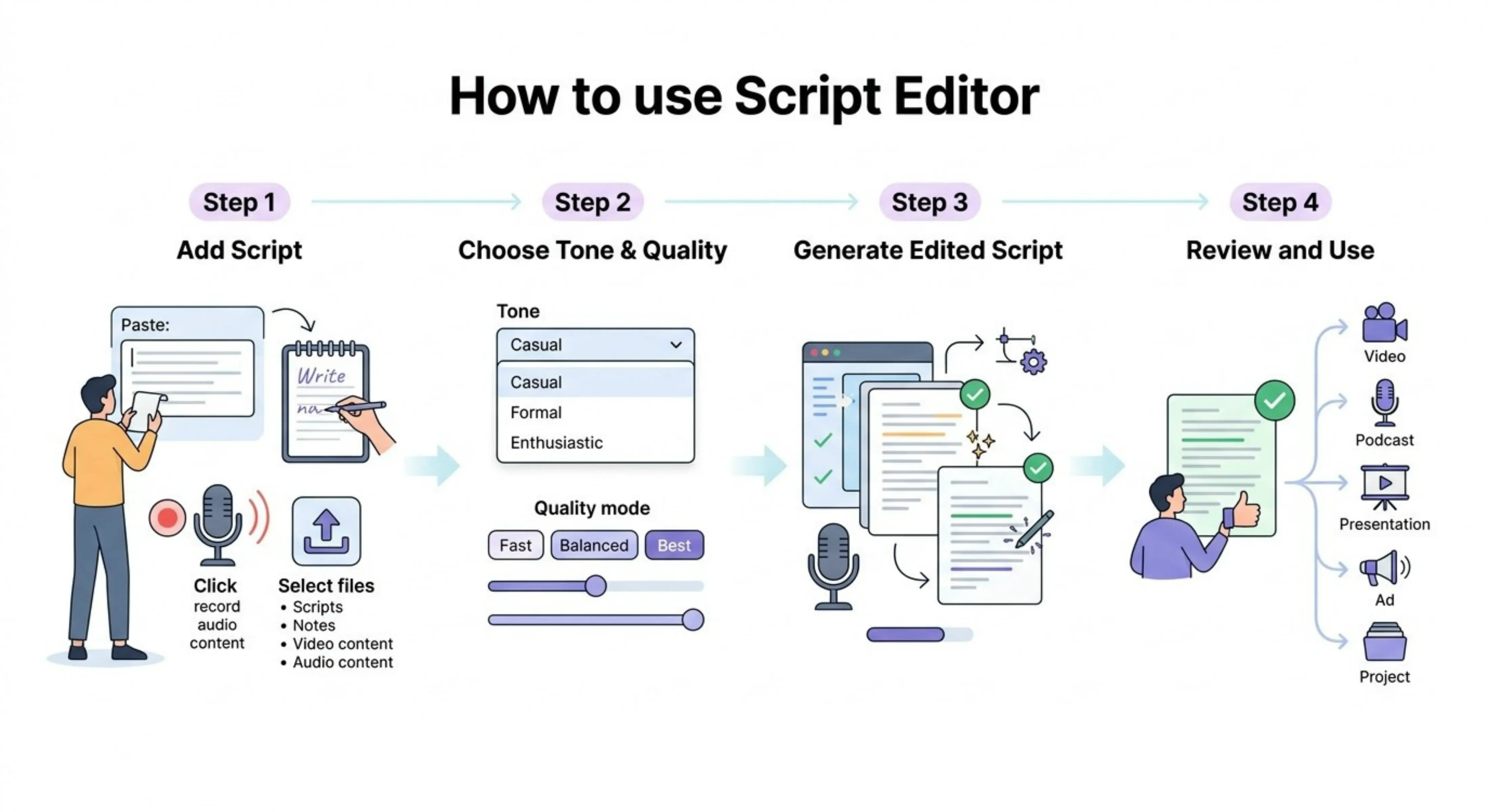
Step 1: Add your script
Paste your script, write it directly, record your content, or upload a file containing your script, notes, video content, or audio content.
Step 2: Choose tone and quality
Select the tone you want from the dropdown, then choose Fast, Balanced, or Best mode based on how detailed you want the edit to be.
Step 3: Generate the edited script
Let the tool process your content and improve the script’s tone, structure, wording, and overall quality.
Step 4: Review and Use
Read the edited script, check the message, adjust any personal details, and use it for your video, podcast, presentation, voiceover, ad, or content project.
Why use a Script Editor?
A script may have a good idea but still feel weak if the flow is unclear, the tone does not match the audience, or the structure feels messy. Many users know what they want to say but struggle to make the script sound smooth, professional, and engaging.
Script Editor helps by turning rough, unclear, or unpolished script content into a cleaner version that is easier to read, record, and present. It saves time, improves quality, and helps users prepare scripts that sound more confident and natural.
Best use cases
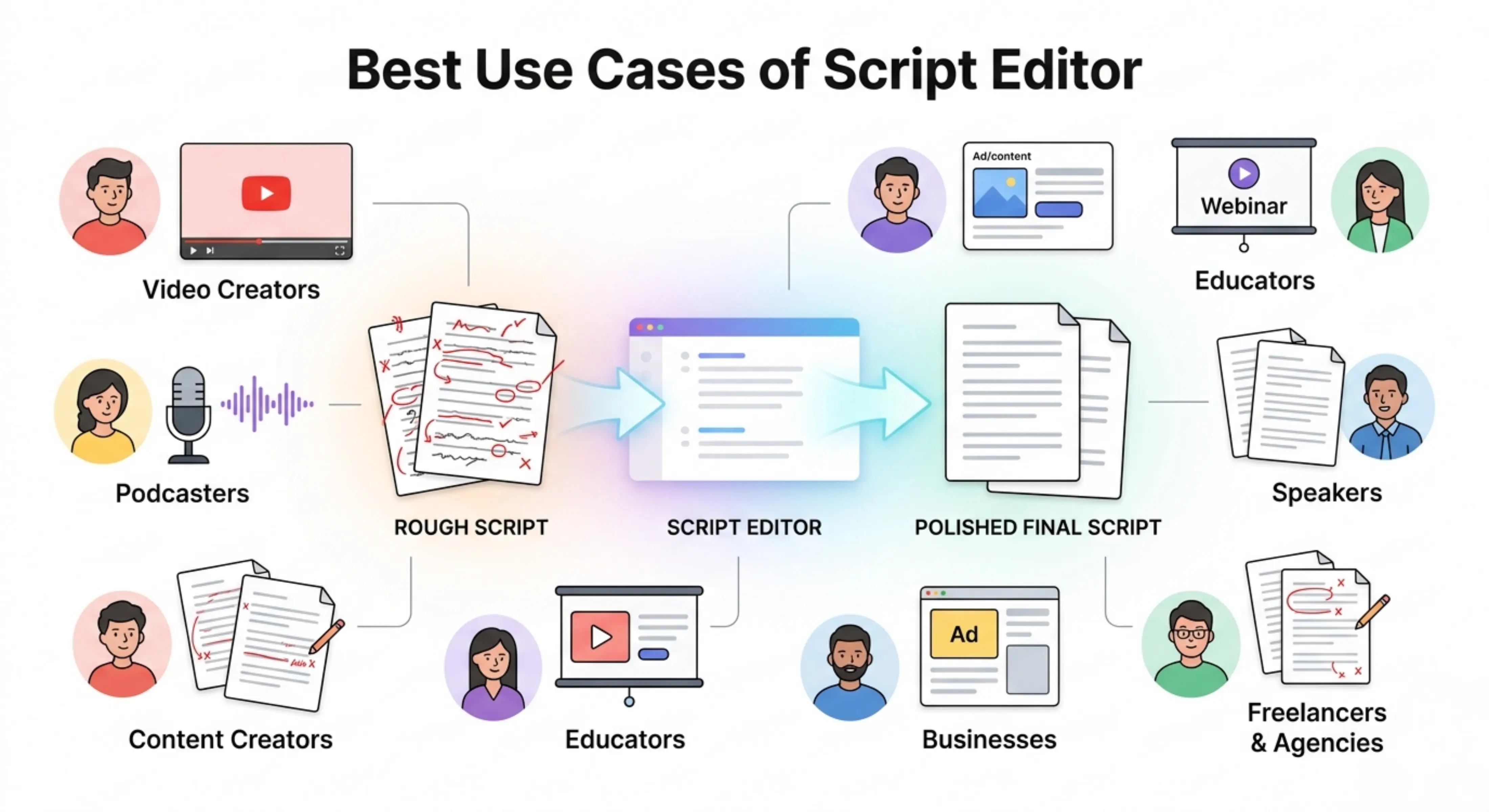
Content creators: Edit scripts for YouTube videos, reels, TikToks, shorts, tutorials, intros, captions, and social media videos.
Video creators: Turn rough video ideas, scene notes, or draft scripts into smoother scripts with better structure and stronger delivery.
Marketers: Edit ad scripts, promotional scripts, product videos, campaign messages, and brand storytelling content.
Educators: Improve lesson scripts, explainer videos, course content, training material, and educational narration.
Speakers and presenters: Refine speech scripts, webinar scripts, presentation notes, event introductions, and public speaking content.
Businesses: Prepare professional scripts for company videos, product explainers, internal training, customer support videos, and brand communication.
Freelancers and agencies: Edit client scripts faster and create polished drafts for videos, ads, podcasts, social content, and campaigns.
Video script editing
Use the tool to improve video scripts by making the opening clearer, the body more organized, and the closing stronger. This helps the script feel more natural when recorded.
Audio script editing
Edit audio scripts for podcasts, voiceovers, narrations, and spoken content. The tool helps improve sentence flow so the script sounds better when read aloud.
Social media script editing
Make short-form scripts sharper, cleaner, and more engaging for reels, TikToks, YouTube Shorts, and other social media platforms.
Presentation script editing
Turn rough presentation notes into a proper speaking script that is easier to follow and more professional for meetings, webinars, and events.
Ad and marketing script editing
Improve promotional scripts so they explain the offer clearly, keep the message focused, and sound more persuasive without becoming confusing.
Tips for better script editing
Add a clear script draft, even if it is rough, so the tool can understand your message.
Choose the tone according to the platform, audience, and purpose of the script.
Use Balanced mode for regular editing and Best mode for important videos, ads, presentations, or professional content.
Review the final script and make sure it still matches your voice, brand, and original message.
Add personal examples, product details, names, pricing, or calls to action manually where needed.
Read the edited script aloud to check if it sounds natural before recording or publishing.
FAQs
How do I edit a script to make it sound better?
Focus on clarity, flow, and tone first. Remove repeated lines, rewrite confusing sentences, and make sure the script moves naturally from one idea to the next.
How can I make my script sound more natural when reading it?
Read it aloud and mark every line that feels difficult to say. A natural script usually uses shorter sentences, simple words, and conversational phrasing. It should sound like something a person would actually say, not like a formal article being read word for word.
Is it better to use a full script or bullet points for a podcast?
Both can work. A full script is useful when you need control, accuracy, or a polished delivery. Bullet points are better when you want the podcast to sound more natural and less rehearsed. Many podcasters use a mix of both.
How do I edit a YouTube video script?
Start with the hook. If the first few lines are slow, viewers may leave before the main value begins. After that, check the structure, remove repeated explanations, improve transitions, and make sure the ending gives the viewer a clear takeaway or next action.
How do I improve a short video script for reels or TikTok?
Keep it quick. Start with the main point, problem, question, or hook. Remove long introductions and keep every line connected to the final message.
How can I turn rough notes into a proper script?
Group your notes into a beginning, middle, and ending. Then turn each point into clear speaking lines. After that, edit the script for tone, flow, and clarity so it feels like one complete piece instead of separate notes.
Next in the studio
Related tools
Next steps in the Speak → Craft → Hear studio — each card shows why it fits.