Use AI Voice Recorder Online in your browser with multilingual output and private processing.
Speak step — capture voice or transcript
Voice Recorder
SpeakStudio
Record, transcribe, and improve with AI in one workflow
Ready
Ready to record
Press Space or click to start
MeetingsLecturesVoice notes
Recorder setup
Choose your microphone, set the spoken language, and decide how the transcript should be processed.
Language
Microphone
Language
More languages coming soon
AI quality
Free drafts fast. Premium unlocks clearer transcripts on Plus.
Recent Recordings
Saved items for this tool (per account)
Voice Recorder Feedback
Ratings and comments from people who used this tool
No feedback yet for this tool.
Record clear voice notes, meetings, interviews, lectures, and ideas with a simple Voice Recorder built for high-quality audio. Choose your microphone, enhance noisy recordings, capture quiet speech, auto-transcribe your audio, detect or select the spoken language, and polish the transcript into clean, readable text.
What is a Voice Recorder?
Voice Recorder is an easy-to-use audio recording tool that helps users record speech clearly and save important voice content in a more useful format.
Instead of using a basic recorder that only captures raw sound, this tool gives users more control over recording quality, microphone selection, noise enhancement, transcription, language detection, and transcript polishing. It is useful for anyone who wants to record voice and turn spoken content into cleaner audio and readable text.
Record voice with better control
Mic selection
Choose the microphone you want to use before recording, especially when your device has multiple input options or an external microphone connected.
Clean voice recording
Record voice notes, meetings, discussions, interviews, lectures, ideas, or reminders with a simple interface that keeps the process easy.
Low whisper recording support
Capture quieter speech more clearly when you are speaking softly, recording privately, or working in a quiet environment.
Auto noise enhancement
Improve the recording by reducing unwanted background noise and making the voice easier to hear.
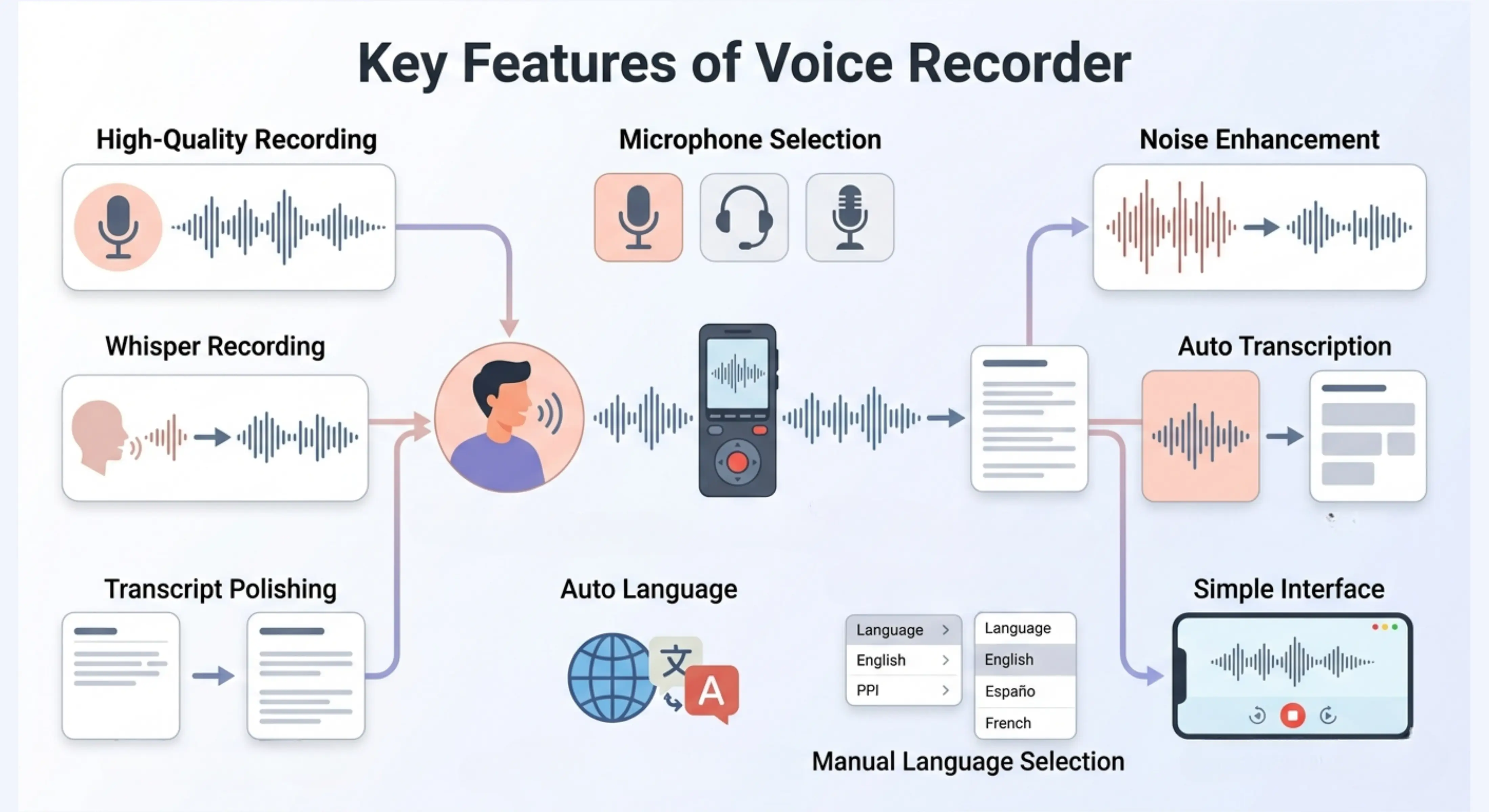
Key features of Voice Recorder
High-quality voice recording
The tool is designed to record speech clearly, so your voice notes, meetings, and audio content are easier to listen to later.
Microphone selection
Select the mic you want to use before recording. This is helpful when you want better sound from an external mic, headset, or preferred device microphone.
Automatic noise enhancement
The tool can improve audio by reducing background noise and making the main voice sound cleaner.
Low whisper recording
Record quiet speech more effectively when you do not want to speak loudly or when the voice input is naturally soft.
Auto transcription option
Turn your recording into text automatically so you can read, copy, edit, search, or reuse the spoken content.
Transcript polishing
The tool can polish the transcript after transcription, making the text cleaner, more readable, and easier to use in notes, documents, emails, or summaries.
Auto language detection
The spoken language can be detected automatically, which makes the tool easier to use for multilingual recordings.
Manual language selection
Users can also select the speech language manually from multiple languages worldwide when they want more control over transcription accuracy.
Simple and clean interface
The tool is built with a clean user interface, so users can start recording, transcribing, and reviewing without a complicated setup.
Choose the right recording workflow
Recording only
Best when you only need to capture audio and listen to it later without creating a transcript.
Recording with transcription
Best when you want both the audio file and written text from your speech, meeting, interview, lecture, or voice note.
Recording with polished transcript
Best when you want the transcript to be cleaner and more readable, especially for professional notes, content drafts, meeting summaries, or documentation.
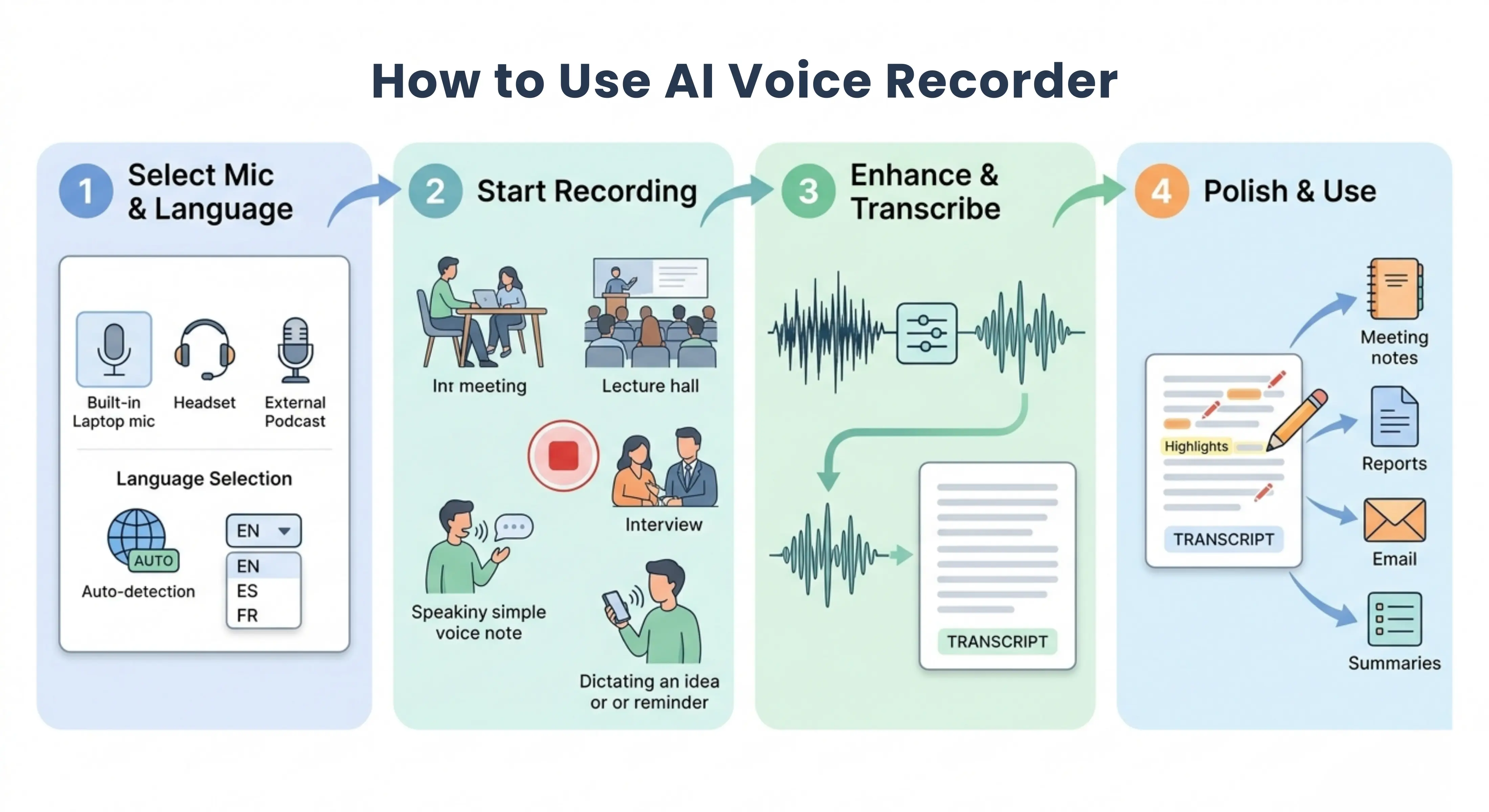
How to use Voice Recorder
Step 1: Select your microphone and language
Choose your preferred microphone, then use auto language detection or manually select the speech language.
Step 2: Start recording your voice
Record your meeting, lecture, interview, voice note, idea, reminder, or any spoken content.
Step 3: Transcribe and enhance the recording
Use auto noise enhancement for cleaner audio and enable transcription if you want the recording converted into text.
Step 4: Polish, review, and use the output
Polish the transcript, check the final text, make small edits if needed, and use the recording or transcript wherever required.
Why use a Voice Recorder?
A normal voice recorder may capture audio, but it often does not help when the voice is quiet, the background is noisy, or you need a written transcript after recording. Many users record meetings, lectures, ideas, or interviews but later struggle to find important points, understand unclear parts, or manually write everything down.
Voice Recorder helps by combining clean audio recording with useful options like microphone selection, noise enhancement, automatic transcription, language detection, and transcript polishing. It saves time, improves clarity, and makes recorded speech easier to listen to, read, edit, and reuse.
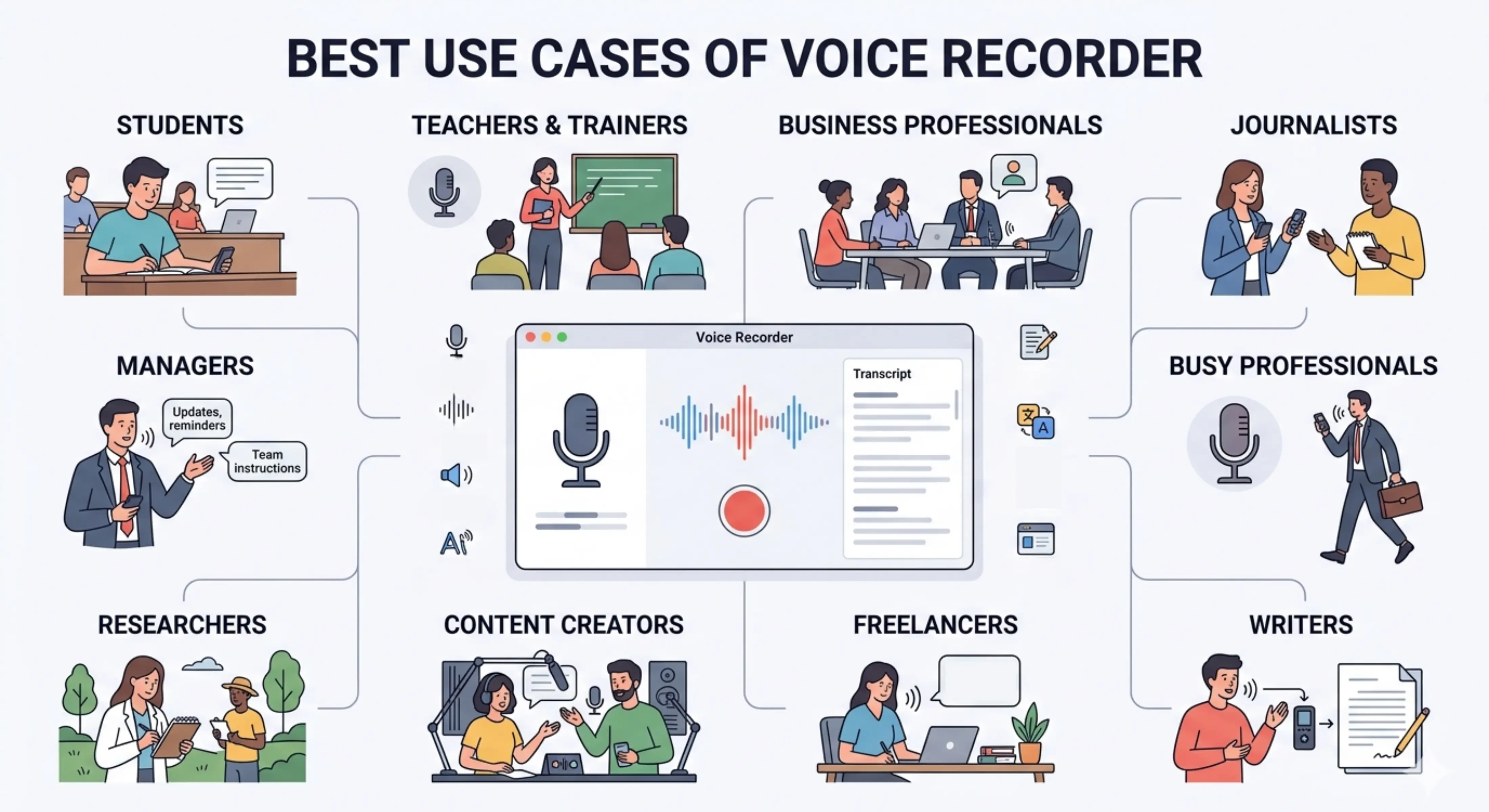
Best use cases
Students: Record lectures, study notes, class discussions, assignment ideas, and academic reminders with optional transcription for easier revision.
Teachers and trainers: Record lessons, explanations, instructions, and training sessions so the content can be reviewed or converted into text later.
Business professionals: Record meetings, quick ideas, team discussions, client calls, and planning notes with cleaner audio and readable transcripts.
Journalists: Record interviews, field notes, story ideas, and spoken observations, then turn the audio into text for easier writing and review.
Researchers: Capture interviews, observations, research notes, and discussion sessions with transcription support for analysis and documentation.
Content creators: Record podcast ideas, video scripts, voice notes, hooks, outlines, and creative thoughts, then polish the transcript into usable content.
Freelancers: Record client instructions, project notes, revision requests, and task ideas so important details are not forgotten.
Writers: Speak rough ideas, story scenes, article points, or personal thoughts and turn them into a cleaner written draft.
Managers: Record instructions, updates, meeting points, and team reminders with transcripts that can be shared or refined later.
Busy professionals: Capture ideas while moving, working, or multitasking, then review the audio or transcript when convenient.
Meeting recordings
Record meetings and create transcripts so important points, decisions, and follow-up tasks are easier to review after the conversation.
Lecture and class notes
Record classroom explanations, lectures, or study discussions and use transcription to turn spoken content into readable study notes.
Interview recording
Capture interviews clearly and convert them into text for article writing, research analysis, documentation, or client records.
Voice notes and quick ideas
Record thoughts, reminders, creative ideas, and personal notes instantly without typing, then polish the transcript for later use.
Quiet or low voice recording
Use low whisper recording support when speaking softly or recording in a quiet environment where you do not want to speak loudly.
Noisy environment recording
Use auto noise enhancement to make voice recordings clearer when there is background sound, room noise, or imperfect recording conditions.
Multilingual voice recording
Record speech in different languages with auto language detection or manual language selection from multiple worldwide languages.
Transcript polishing
Convert raw spoken text into a cleaner version that is easier to read, share, edit, or use in professional and personal work.
Tips for better voice recordings
● Choose the best available microphone before starting the recording.
● Record in a quiet place whenever possible for better audio quality.
● Keep the microphone close enough to capture your voice clearly.
● Use auto noise enhancement when recording in a busy or noisy environment.
● Select the correct language manually if auto detection does not match your speech.
● Use transcript polishing when you want cleaner, more readable text.
● Review the final transcript because names, numbers, and technical terms may need small corrections.
● Speak clearly and avoid talking over other speakers when recording meetings or interviews.
FAQs
What is the best way to record clear voice audio?
The best way to record clear voice audio is to use a good microphone, stay close to the mic, reduce background noise, and record in a quiet place. A voice recorder with mic selection and noise enhancement can also help improve clarity when the recording environment is not perfect.
Can a voice recorder transcribe audio to text automatically?
Yes, a voice recorder with auto transcription can turn your recorded speech into written text. This is useful for meetings, lectures, interviews, voice notes, research discussions, and personal ideas that you want to read or edit later.
Can I record quiet speech or whispering?
Yes, this Voice Recorder supports low whisper recording, which helps capture quieter speech more clearly. For best results, use a good microphone, stay close to the mic, and avoid loud background noise.
Why is my voice recording unclear?
Voice recordings can sound unclear because of background noise, distance from the microphone, poor mic quality, room echo, low speaking volume, or incorrect input selection. Choosing the right microphone and using noise enhancement can help improve the recording.
Can the tool detect the language automatically?
Yes, the tool can auto-detect the spoken language during transcription. Users can also manually select the language from multiple worldwide options if they want more control or if the recording includes a specific language.
Is automatic transcription accurate for meetings and lectures?
Automatic transcription can be very helpful for meetings and lectures, especially when the audio is clear and speakers talk one at a time. Accuracy may be lower if there is background noise, overlapping speech, strong accents, technical terms, or unclear audio, so reviewing the transcript is recommended.
Next in the studio
Related tools
Next steps in the Speak → Craft → Hear studio — each card shows why it fits.