How to Write Real Estate Listings that Sell | 2026 Guide

Writing a real estate listing sounds straightforward until you sit down to do it. You have a good property, you know the features, but the words either feel flat or sound exactly like every other listing on the market. Buyers scroll fast, and a listing that blends in gets ignored.
This guide walks through what makes a listing work, how to structure it, and where a listing generator can save you real time without sacrificing quality.
What Makes a Real Estate Listing Actually Sell?
A listing that performs well is not necessarily the most poetic one. It is the one that gives buyers what they need quickly and makes the property feel worth their time to explore further.
The qualities that matter most:
Clear language that is easy to scan
Specific details rather than vague praise
Benefits attached to features, not just feature mentions
Accurate information that holds up during a showing
A tone that feels genuine without overselling
Easy readability with no unnecessary filler
Start With the Property's Strongest Selling Points
Before you write a single sentence, get clear on what actually makes this property worth buying. Not everything needs to go in the listing, but you need to know what you are working with.
Go through this before you start writing:
What is the single strongest feature of this property?
Is the location a selling point, and if so, what specifically?
Have there been any recent upgrades or renovations?
How does the layout work for daily living?
What kind of buyer would find this property most useful?
Is there a lifestyle angle worth mentioning (commute access, schools, outdoor space)?
Once you have answered these, you have the raw material. Now the job is turning it into something readable.
How to Structure a Real Estate Listing Description
Open With the Strongest Appeal
Your first sentence carries more weight than anything else in the listing. Buyers decide in a few seconds whether to keep reading. Lead with what makes this property stand out, whether that is the location, the size, a renovation, or something about the layout that genuinely works well.
Highlight Important Features Clearly
After the opening, list the key features in a way that flows naturally. Do not just dump a list of rooms and square footage. Mention what matters and keep the language clean. Buyers want to picture themselves in the space, and cluttered feature lists make that harder.
Connect Features to Real Buyer Value
A fireplace is a feature. Staying warm without the heating bill doing the heavy lifting is the value. This does not mean being dramatic about it. It just means giving buyers a reason to care about what you are describing. One or two well-placed benefit statements go further than a full paragraph of adjectives.
Add Practical Details Without Clutter
Bedroom count, bathrooms, parking, nearby amenities, and property type are details buyers need. Work them in without letting them take over the listing. They support the description, they do not lead it.
Close With a Clear Final Impression
End the listing with something that reinforces why this property is worth a look. A short closing that points toward the showing or next step works well here. Keep it simple and direct.
Real Estate Listing Generator by VoiceCraftTool
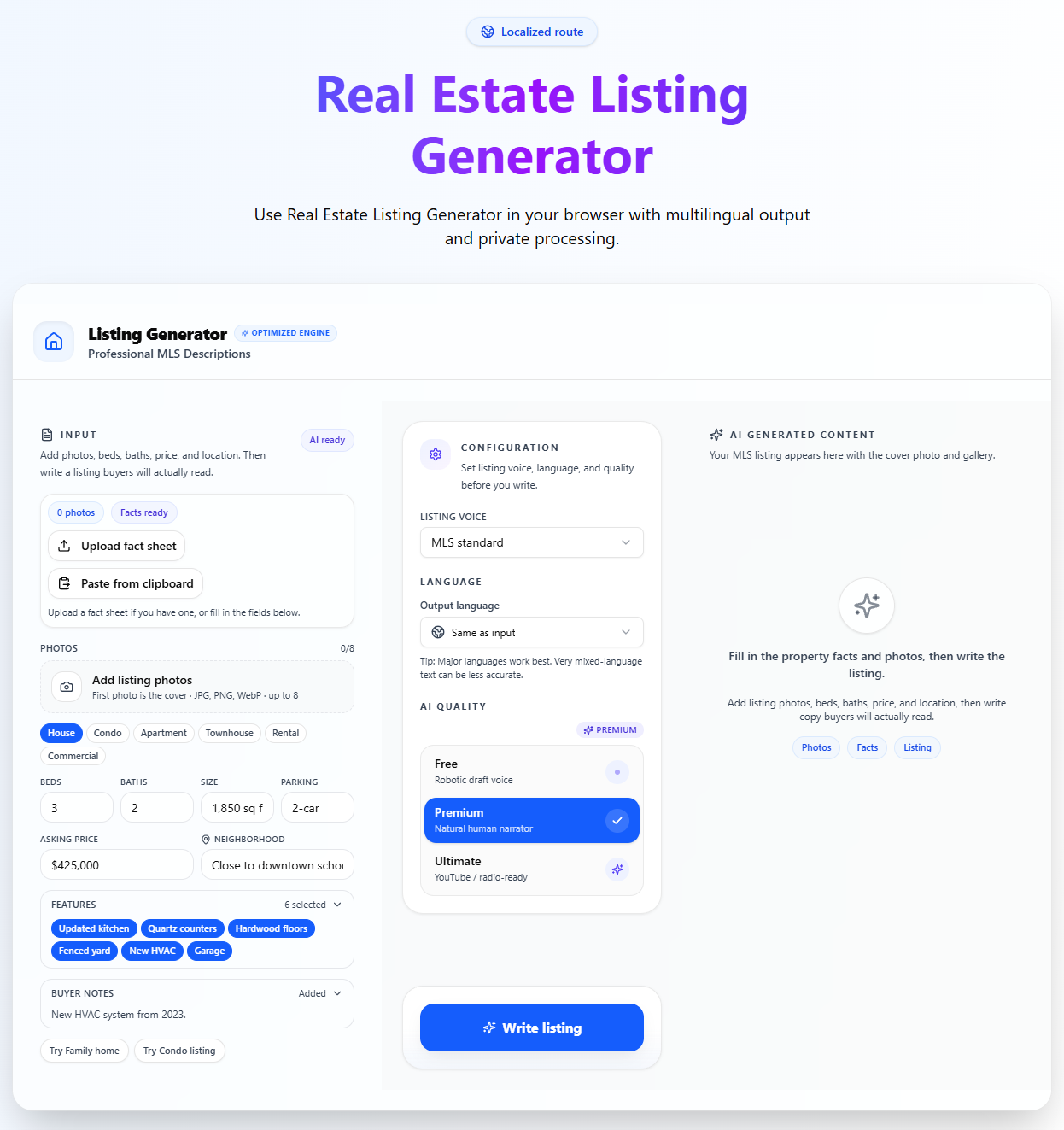
The Real Estate Listing Generator by VoiceCraftTool is built to help agents, brokers, and sellers turn raw property details into organized listing drafts. It is not meant to write a finished listing on its own. What it does is give you a solid first draft so you are not starting from a blank page every time. The structure is already there, the wording is cleaner than most first attempts, and you spend your time refining rather than building from scratch.
Key Features
Fast Draft Generation:
The tool turns core property details into a usable draft in seconds, helping you move faster from notes to a working listing.
Non-robotic & Buyer-focused Wording:
It helps shape plain details into wording that feels clearer, smoother, and more appealing to buyers instead of sounding flat or overly technical.
Consistent Structure:
When you are handling several properties, consistency matters. The tool helps keep listings organized in a more uniform and professional format.
No Repetitive Listing Work:
Writing listing after listing can become repetitive. This makes the drafting process quicker, so you can spend more time reviewing and improving the final copy.
No Blank Page Problem:
Starting is often the hardest part. The tool gives you something solid to work from right away.
Multilingual Support:
It also supports multilingual listing creation, which can be useful when you want to present properties to different audiences or wider markets.
How to Use (Simple Steps)
1. Enter the Property Details
Add the main property information into the generator, including the key features, layout, location highlights, and any selling points you want the listing to emphasize.
2. Generate the First Draft
Let the tool create an initial listing draft based on the details you provided. This gives you a structured version to work from instead of starting with a blank page.
3. Refine the Wording and Review the Details
Read through the draft carefully and adjust any wording that does not match your style, tone, or the property itself. At the same time, verify important facts, figures, and compliance-sensitive language.
4. Finalize and Publish
Once the listing reads well and accurately reflects the property, prepare the final version for publishing on your chosen platform.
Real Estate Listing Mistakes That Make Buyers Skip
A weak listing is not always one that is badly written. Sometimes it is just missing a few things that keep buyers engaged.
Vague language: Words like "charming," "cozy," and "unique" mean nothing without something specific behind them
Generic openings: Starting with "Welcome to this beautiful home" is used so often it registers as background noise
Missing key details: Buyers want to know bedrooms, bathrooms, parking, and location before they consider anything else
Walls of text: Long, unbroken paragraphs lose readers quickly. Break it up.
Overselling: Listings that sound too good feel dishonest. Buyers notice and move on.
Filler sentences: Any sentence that does not add real information is just taking up space
Fair Housing and Compliance-Friendly Writing Matters
Real estate listings are subject to fair housing laws, and the language you use matters more than most people realize. The rule of thumb is simple: describe the property, not the type of person who should live there.
Phrases that reference neighborhoods in ways that imply racial or ethnic composition, descriptions that suggest the property is only suited to people of a certain background, and wording that implies restrictions based on family status or religion can all create legal exposure.
What to do:
Describe physical features, location benefits, and practical amenities
Stay factual and property-focused throughout
Avoid phrases like "perfect for young professionals" or "quiet adult community" unless the property is legally designated as such
Review the listing with compliance in mind before it goes live
When in doubt, focus on what the property offers and let buyers decide if it fits their needs.
Conclusion
A listing that works is clear about what the property offers, specific enough to feel credible, and written in a way that buyers can actually read without losing interest halfway through. The writing principles are not complicated, but applying them consistently across every listing takes time. A generator like the one from VoiceCraftTool can carry the early drafting work so you focus on getting the final version right. The tool handles the structure. The accuracy, tone, and judgment still come from you.
FAQs
What should a good real estate listing include?
A good real estate listing should include the property’s strongest selling points, key practical details, and clear wording that helps buyers quickly understand what makes the property worth considering. Important information like bedrooms, bathrooms, layout, location highlights, upgrades, and lifestyle value should be presented in a way that is easy to read and specific enough to feel credible.
How do you write a real estate listing that attracts buyers?
Start with the property’s strongest appeal, then highlight the most important features in a clean and natural flow. The best listings do not just name features. They also help buyers understand why those features matter in daily life. Clear structure, specific wording, and a genuine tone usually work better than dramatic language or exaggerated claims.
What are the biggest mistakes to avoid in a property listing?
Some of the most common mistakes are vague wording, generic openings, missing key details, long unbroken paragraphs, overselling, and filler sentences that add no real value. These things make listings harder to trust and easier for buyers to skip. A stronger listing stays focused, readable, and grounded in real property details.
Can AI help write real estate listings?
Yes, AI can help by turning basic property information into a structured first draft much faster than writing from scratch. It is especially useful when you are handling multiple listings or struggling with repetitive writing. Still, AI should support the drafting process, not replace final human review, because the final version should always be checked for tone, accuracy, and compliance.
How do I make a real estate listing sound less generic?
The best way is to move beyond empty praise and focus on specific details with real buyer value. Instead of using broad words like “beautiful” or “charming” on their own, describe what the feature actually offers. This helps the listing feel more useful, more believable, and easier for buyers to connect with.
How do I write a real estate listing without violating fair housing rules?
Keep the description focused on the property itself rather than the type of person who should live there. That means describing physical features, amenities, and location benefits while avoiding wording that implies preferences based on family status, religion, ethnicity, or similar protected characteristics. A simple review before publishing can help reduce compliance risk.
How can I write real estate listings faster without losing quality?
A faster workflow starts with gathering the right property details before writing, using a clear structure, and reducing repetitive drafting work. A listing generator can help create a strong first draft quickly, but quality still comes from reviewing the wording, checking the facts, and making sure the final copy reflects the property accurately.